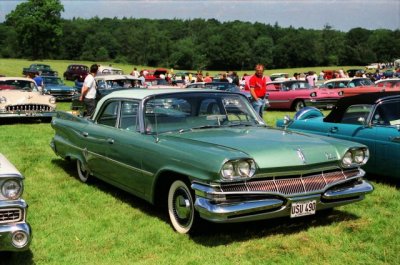
Bruzilla, while I agree with your ideas, we have to remember that a name like Dodge Dart belongs to the company, and they can do what they like with it. Who complained when the full sized 1960 Dodge Dart name was applied to the B-Body in 1962? And then again switched to an A-Body a year later. There's next to no model similarities in the first several years, yet customers kept buying them.
What a marque does with their branded names is indeed their business, but why they're doing it is our business since what they do is designed to influence our buying decisions.

Generally speaking, any model can go through variations of design and body styling during its life as a consumer good. The Road Runner was the same way. Started as a Belvedere, migrated to a Satellite, migrated to a Fury, then migrated to an F-body Volare. My second favorite cars, Ford Police Interceptors, migrated from Galaxies to LTDs, to Crown Victorias, to Police Interceptors, to Tauruses. These changes are just the normal flow of product design and improvement.
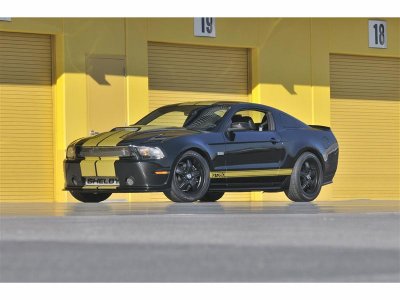
What we're talking about here is the resurrection of a retired model name. This is also done from time to time, for example Ford's Crown Victoria model was retired in the 1956 and brought back in 1979. The name was brought back because it was found to inspire a sense of luxury and prestige. Dodge brought the Charger name back to life in 1982 because the name inspired a sense of performance, but they applied it to a car that looked nothing like a traditional Charger and that had no performance. This was also the period when Chrysler tried to really fool consumers by planning to place HEMI badging on 2.2L cars because the 2.2L did have hemispherical heads, but the hue and cry from us Mopar guys shut that plan down. So the Charger came out in 1983, lived for one production cycle, and died a quick death in 1987. What's also interesting about the L-body Charger saga is that Plymouth opted not to follow suit with Dodge and name their L-body Road Runner. They went with a new name, Tourismo, and that was a wise move.
But getting back to the activation of retired names we're seeing today, the business model and motivation is completely different. The Mustang model is unique in that unlike Charger, Dart, Barracuda, Road Runner, etc., it has never been retired, and sales have been driven solely by styling and performance changes, the most drastic of which has been the 2005 change, and the reason for that change was very, very, specific: increase sales by making the car look like a 69/70 car. The resulting sales and profit increases from that change drove an entirely new market, which is the retro-styling one we're seeing now. This is not a migration of a model through current body styles, but the resurrection of retired names and retired designs to influence buyers.
I suspect the current Charger would have failed just as the L-body effort did were it not for the availability of a more realistic Hemi engine than the old 2.2. Making a Hemi-type engine available was enough to generate buyer interest until they had time to start making the Charger look like a retro-Charger, and Charger sales are remaining pretty stable. The Dart II was an attempt to resurrect a retired name and put it on a car that has no connection to its predecessor, so I suspect it's going to end up like the 83-87 Charger.
- - - Updated - - -
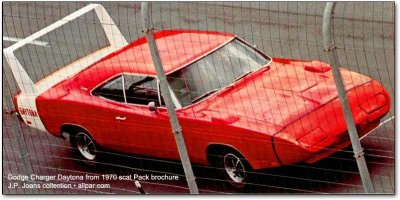
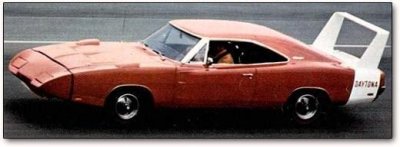
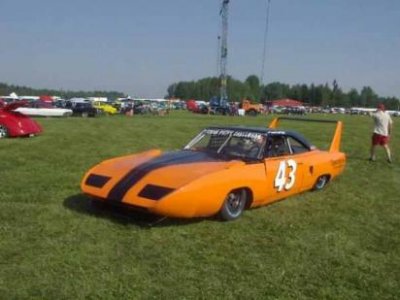
They were only produced in very limited #'s, 1920 something 1970 Plymouth Superbird's in the whole country, available to the general public, {equivalent to 1 to be sold for each Plymouth Dealership} & 503 or something like that of the 1969 Daytona's in the whole country the previous year, they bumped the #'s higher in 1970 because of the success of the Daytona's on the racetrack...
so any not sold, is a big part of the equation, when there were only something like
2023 total "real" winged warriors ever made/produced... #'s vary depends on who you trust for accuracy... They were put on lots for the sole purpose of meeting NASCAR mandatory homologation production/sales quotas.... I have read, but have never seen one in person, there were 1970 Daytona's planed, but something like only 3 are known to exist {don't quote me on that #} the headlight configuration & NASCAR rules were changed & killed the 70 project... Check out Winged Warrior National B-Body registry web site
www.wwnboa.org/ , great reads & history Wikipedia/Google search is another source, for the facts,
www.AllPar.com ,
www.MyMopar.com , among others like the Aero Cars Forums over @
www.DodgeCharger.com , get the straight real scoop/take on these historic/iconic cars...
The Daytona Charger was essentially a test-bed car to test out aerodynamic enhancements, whereas the Superbird was designed as an integrated package where all the components would work together, which is why the Superbird has unique design elements like the backlight that are not found on the Road Runner while the Daytona Charger doesn't have unique elements.
What is more relevant is why the Superbird was built. Whereas the Daytona was built to test concepts, the Superbird was built to convince Richard Petty to return to Chrysler, and to do that Chrysler needed a car that would outperform the Ford Talledega. Since the Superbird was a purpose-designed car and not a test platform, NASCAR rules required one car be made for every dealership for the model to be eligible. The NASCAR rule change that killed the wing cars was not in 1970, but for 1971 racing and had nothing to do with the Daytonas. The rule made any car with a wing and a 426 Hemi ineligible, and meant a 1971 Superbird (or Daytona if they became production cars, which I don't think Dodge ever planned to make them), would have to run a less powerful engine and Chrysler had Petty onboard by then and didn't want to run a winged car with a weaker engine so the line ended in 70. And anyone wondering why the rules changed in 1971 just needs to look at the 1-2-3 race standings for every NASCAR race in 1970 and see what types of cars took 1-2-3 in just about every race that year - Superbirds and Daytonas.