

You are using an out of date browser. It may not display this or other websites correctly.
You should upgrade or use an alternative browser.
You should upgrade or use an alternative browser.
The story of the A-10 and why the F-35 cannot replace it.
- Thread starter paladin06
- Start date

- Local time
- 5:43 PM
- Joined
- Mar 10, 2010
- Messages
- 32,824
- Reaction score
- 61,049
- Location
- Hanover, Pennslyvania
Just another example of a clueless government that's running this country.
I saw two Warthogs fly over last Sunday. Heading north. I haven't seen any in quite awhile.
I saw two Warthogs fly over last Sunday. Heading north. I haven't seen any in quite awhile.

Photon440
Well-Known Member
- Local time
- 2:43 PM
- Joined
- Mar 14, 2012
- Messages
- 18,593
- Reaction score
- 34,454
- Location
- Surrey, B.C. Canada
I had no idea the F-35 was supposed to replace it. Sort of like comparing a CNC milling machine to a sledge hammer. They both have their place in a shop, but don't replace each other.

![EmGpe5k[1].jpg](https://www.forbbodiesonly.com/moparforum/data/attachments/163/163028-ce8f21fad1889a1b757a52bf0219b6e1.jpg?hash=zo8h-tGImh "EmGpe5k[1].jpg")

eagleone1983
Well-Known Member
The F-35 isn't meant to replace the A-10, it's supposed to replace the F-16. The A-10 is going away because of the amount of money it cost to maintain it.

- Local time
- 2:43 PM
- Joined
- Jan 16, 2011
- Messages
- 78,577
- Reaction score
- 126,378
- Location
- NorCal Sierras
from hearing that & reading a few of the posts, in that link...
Even the pilots that fly such ground/troop support missions are asking,
why the F-35 is the replacement ??, when it's not intended for that kind of mission...
More idiotic govt. bureaucracy crap, or downsizing &
trying to make something work, when that it was never built for or intended to do...
Probably orders handed down from some DC pencil pusher or political board,
or somebody higher up, that's never flown an A-10 or let alone ever been in combat,
or never even been in the military, Period !!
Ideological political people, or their appointed penny pinchers/accountants,
usually makes these types of stupid decisions...
Even the pilots that fly such ground/troop support missions are asking,
why the F-35 is the replacement ??, when it's not intended for that kind of mission...
More idiotic govt. bureaucracy crap, or downsizing &
trying to make something work, when that it was never built for or intended to do...
Probably orders handed down from some DC pencil pusher or political board,
or somebody higher up, that's never flown an A-10 or let alone ever been in combat,
or never even been in the military, Period !!
Ideological political people, or their appointed penny pinchers/accountants,
usually makes these types of stupid decisions...

cr8crshr
Well-Known Member
- Local time
- 2:43 PM
- Joined
- Feb 13, 2009
- Messages
- 8,055
- Reaction score
- 15,695
- Location
- Northwest Nevada
As it stands now, Congress has voted to not replace the A10 but continue with them for the foreseeable future. Just too good a platform for close air support. Stay tuned for updates as they are available...cr8crshr/Tuck

Propwash
Well-Known Member
- Local time
- 4:43 PM
- Joined
- Oct 29, 2009
- Messages
- 9,695
- Reaction score
- 4,338
- Location
- Island of Misfit Toys
A-10's were set to be retired back in the early 90's, then the first gulf war happened. The aircraft proven how apt it was for close air support & artillery,armor and copter mitigation. Congress keep it after that. Spent time side by side with A-10's here in the US and overseas. They are outstanding aircraft. Built like a tank, very reliable and is basically a flying gun. Seen them come back with tree branches in their wheel wells. Big issue with maintaining them is not that breaks a lot...problem is getting parts. Fairchild Republic quit building the A-10 & parts years & years ago. I believe Boeing has some parts lines they're reproducing. I know a few squadrons had folks trying to salvage parts from Davis Monthan AFB.
Like cr8crshr mentioned, the A-10 is not slotted for retirement. An F-35 doesn't have half the close air support capabilities to replace it anyways. No plane does. Closest would be helicopters, like an Apache. Gonna be a sad day when they hang the Warthog's wings up, and set her out to pasture.
Like cr8crshr mentioned, the A-10 is not slotted for retirement. An F-35 doesn't have half the close air support capabilities to replace it anyways. No plane does. Closest would be helicopters, like an Apache. Gonna be a sad day when they hang the Warthog's wings up, and set her out to pasture.

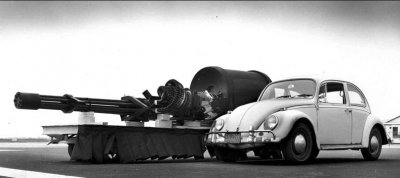
As Prop indicated, it is basically a flying gun. IIRC, it is the first plane built around the gun, rather than designing guns to fit an airplane design.
One of the things that make them so valuable is the fear they put into the enemy - and that alone makes it a very valuable weapon...
One of the things that make them so valuable is the fear they put into the enemy - and that alone makes it a very valuable weapon...

- Local time
- 3:43 PM
- Joined
- Feb 22, 2013
- Messages
- 4,237
- Reaction score
- 5,770
- Location
- The Red Anvil Dog House
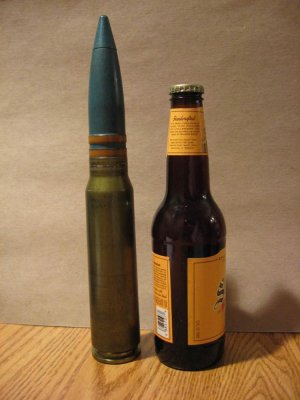
Perhaps this puts it into perspective.

71airgrabberRR
Well-Known Member
Years ago we were on a road march with our tanks in the desert. We had our radio antennas up (not tied down as usual) to increase the range between units. I was standing up in the Commanders position looking forward. Suddenly my loader had a terrified look on his face and couldn't talk. All he could do was point towards the rear area behind us. I turned around just in time to see a Hog barreling down on us. He was SO low I honestly thought he was going to hit us, so I quickly dropped down inside the turret. He screamed over the top of our tank column at an VERY low altitude.
The plane was so low that it clipped the top of our antennae off. We were missing most of the top section of our two part mast.
Those guys (and gals) who fly those planes are definitely good at what they do.
I'm so glad they were on our side!!!!!
I've heard them make firing passes and it sounds like a chain saw running up at a high RPM and looks like a red stream of water coming out of a fire hose. Just think about it. Between the tracer rounds that you can see there are 4 rounds that you don't see.
I've seen the end results after a firing pass too. They can open up a tank like its nothing.
If your a tanker or a grunt, POG, you can agree when we say "God bless the Hog drivers!!!"
The plane was so low that it clipped the top of our antennae off. We were missing most of the top section of our two part mast.
Those guys (and gals) who fly those planes are definitely good at what they do.
I'm so glad they were on our side!!!!!
I've heard them make firing passes and it sounds like a chain saw running up at a high RPM and looks like a red stream of water coming out of a fire hose. Just think about it. Between the tracer rounds that you can see there are 4 rounds that you don't see.
I've seen the end results after a firing pass too. They can open up a tank like its nothing.
If your a tanker or a grunt, POG, you can agree when we say "God bless the Hog drivers!!!"


- Local time
- 5:43 PM
- Joined
- Jan 23, 2009
- Messages
- 6,761
- Reaction score
- 5,624
- Location
- New Jersey The State of Tax Theives
Then reproduce the maintenance items on the Wart Hog. But this plane is necessary. Why would you not want the Tank Buster? Just another example of idiots that run this Country, the wort Hog has to be one one of the scariest close combat plane ever. Bring the Wort Hog back as a main line plane.
71airgrabberRR
Well-Known Member
Especially when you've seen one from the business end.
I agree. This is a plane that needs to stay in the USAF inventory. If they get rid of it, that would be a disaster. Similar to the time when the government decided that since we have air to air missiles, why do we need a gun on a fighter plane? That is what happened in the late '50s and early '60s. Take a look at the F4 Phantom. It was initially produced without a cannon. Several years later when our young men were dying over Vietnam, they wised up and put a cannon inside a pod hung under the plane. Too late for some of our pilots who made the ultimate sacrifice or were housed in the Hanoi Hilton.
Typical government crap. Make useless decisions that costs the lives of our men and women.
I'll bet things would be different if they had their &sses sitting on the line.
I agree. This is a plane that needs to stay in the USAF inventory. If they get rid of it, that would be a disaster. Similar to the time when the government decided that since we have air to air missiles, why do we need a gun on a fighter plane? That is what happened in the late '50s and early '60s. Take a look at the F4 Phantom. It was initially produced without a cannon. Several years later when our young men were dying over Vietnam, they wised up and put a cannon inside a pod hung under the plane. Too late for some of our pilots who made the ultimate sacrifice or were housed in the Hanoi Hilton.
Typical government crap. Make useless decisions that costs the lives of our men and women.
I'll bet things would be different if they had their &sses sitting on the line.

GrabberOrange69
Well-Known Member
Then reproduce the maintenance items on the Wart Hog. But this plane is necessary. Why would you not want the Tank Buster? Just another example of idiots that run this Country, the wort Hog has to be one one of the scariest close combat plane ever. Bring the Wort Hog back as a main line plane.
Actually it's more indicative of the General Officer corps of the Air Force.
By the way, they want to rid themselves of the Predator drone also, another weapon that has proven itself time and time again in low intensity warfare. Both the A-10 and the Predator are invaluable tools against Al Qaeda, ISIS, and "insurgents" globally. Why on earth would you cancel either during the middle of a fight?

The problem with the A-10 is the same issue we have with the P-3C and the B-52... and our cars.  They're old, and they are wearing out. It's one thing to buy replacement engines and avionics, but now we're seeing cracks in wing spars, metal fatigue, and other issues that make it cost prohibitive to keep these birds in the air. This is a video of one C-130 crash that led to the grounding of close to a third of the P-3C fleet and put a greater focus on wing spar cracks in all aircraft...
http://www.youtube.com/watch?v=4bDNCac2N1o
It costs a lot more to restore and keep our cars on the road, and it's the same issue with these planes. Even after purchase prices are factored in, it's cheaper to buy and fly an F-35 than it is an A-10.
They're old, and they are wearing out. It's one thing to buy replacement engines and avionics, but now we're seeing cracks in wing spars, metal fatigue, and other issues that make it cost prohibitive to keep these birds in the air. This is a video of one C-130 crash that led to the grounding of close to a third of the P-3C fleet and put a greater focus on wing spar cracks in all aircraft...http://www.youtube.com/watch?v=4bDNCac2N1o
It costs a lot more to restore and keep our cars on the road, and it's the same issue with these planes. Even after purchase prices are factored in, it's cheaper to buy and fly an F-35 than it is an A-10.
Photon440
Well-Known Member
- Local time
- 2:43 PM
- Joined
- Mar 14, 2012
- Messages
- 18,593
- Reaction score
- 34,454
- Location
- Surrey, B.C. Canada
I wouldn't have thought, short of using sheets of gold, that the A-10 fixes would be more than flying the f-35. It's not uncommon for major parts, including wings, to be part of an upgrade program. The Wikipedia page on the A-10 includes this: With a variety of upgrades and wing replacements, the A-10's service life may be extended to 2028, though there are proposals to retire it sooner.
Yeah, there was a lot of discussion about wing replacement going on after that C-130 crash, and there was an effort put in place to fund research into the feasibility of doing it. Most of that came to an end when the Brits jumped the gun and ordered replacement wing sets for their Nimrod fleet. They took measurements off an aircraft and ordered wing sets for the entire fleet, and what they found was although the planes were supposed to all be identical, there were differences between each aircraft that resulted from the manufacturing process and stress put on the fuselage over its service life and they ended up with a bunch of wing sets that were scrap because they couldn't be mated to the aircraft. The takeaway from that experience was if you have to rewing, you have to custom make each wing set for each aircraft, and that's prohibitively expensive.
The short-term fix in the early 2000s in the case of the P-3Cs and A-10s was to take planes from reserve squadrons and move them to active duty squadrons. Back in the 1980s, a decision was made by Reagan's DoD to upgrade active duty and reserve squadrons at the same time. It used to be reserve squadrons got planes that were retired from active duty squadrons, but Reagan wanted active duty and reserve outfits to be equally capable, so the reserves had planes that were as new or newer than some active duty units but had far less flight hours on them. A lot of reserve planes were moved to active duty squadrons and the high-hour planes from active duty squadrons were sent to Davis-Monthan for disposal. But now those lower-hour birds are getting used up and that's why the F-35 and P-8 programs have been pushed as hard as they have been because there's no more stop-gap tricks to pull out of our hats.
As for costs, there's a huge difference in flight hour costs between keeping a bird made in the 60s/70s flying as compared to keeping a new bird in the air. A lot of vendors for the A-10 are gone or have moved on to other products, which means a lot of small lot orders for spares and those are expensive. Plus most everything on planes of this era was mechanical or electro-mechanical, and not digital like today's stuff, so they are hard to make and expensive. Also, maintenance is much more expensive as trouble-shooting, repair/replacement, and line swaps take a lot of time. With the F-35, the aircraft transmits it's maintenance status to maintainers while it's on approach and informs them of any issues, and repairing them is a simple matter of swapping out a box on the flight line and the box gets sent back to Northrup for repair. I don't know what the per hour costs for the A-10 are, but I know they're about $18k/hour for the F/A-18 Hornets and they're much newer aircraft than the A-10s, and the per hour for the F-35 is expected to be about $10k/hour, and that extra $8k+/hr adds up quick for an operational aircraft series.
There's no doubt the A-10 is better at the close air support mission than the F-35, just like I would make the argument the P-3C is better than the P-8A for that mission, but the costs and risks of operating these old aircraft is just too high.
The short-term fix in the early 2000s in the case of the P-3Cs and A-10s was to take planes from reserve squadrons and move them to active duty squadrons. Back in the 1980s, a decision was made by Reagan's DoD to upgrade active duty and reserve squadrons at the same time. It used to be reserve squadrons got planes that were retired from active duty squadrons, but Reagan wanted active duty and reserve outfits to be equally capable, so the reserves had planes that were as new or newer than some active duty units but had far less flight hours on them. A lot of reserve planes were moved to active duty squadrons and the high-hour planes from active duty squadrons were sent to Davis-Monthan for disposal. But now those lower-hour birds are getting used up and that's why the F-35 and P-8 programs have been pushed as hard as they have been because there's no more stop-gap tricks to pull out of our hats.
As for costs, there's a huge difference in flight hour costs between keeping a bird made in the 60s/70s flying as compared to keeping a new bird in the air. A lot of vendors for the A-10 are gone or have moved on to other products, which means a lot of small lot orders for spares and those are expensive. Plus most everything on planes of this era was mechanical or electro-mechanical, and not digital like today's stuff, so they are hard to make and expensive. Also, maintenance is much more expensive as trouble-shooting, repair/replacement, and line swaps take a lot of time. With the F-35, the aircraft transmits it's maintenance status to maintainers while it's on approach and informs them of any issues, and repairing them is a simple matter of swapping out a box on the flight line and the box gets sent back to Northrup for repair. I don't know what the per hour costs for the A-10 are, but I know they're about $18k/hour for the F/A-18 Hornets and they're much newer aircraft than the A-10s, and the per hour for the F-35 is expected to be about $10k/hour, and that extra $8k+/hr adds up quick for an operational aircraft series.
There's no doubt the A-10 is better at the close air support mission than the F-35, just like I would make the argument the P-3C is better than the P-8A for that mission, but the costs and risks of operating these old aircraft is just too high.
Photon440
Well-Known Member
- Local time
- 2:43 PM
- Joined
- Mar 14, 2012
- Messages
- 18,593
- Reaction score
- 34,454
- Location
- Surrey, B.C. Canada
Well, it looks like at least some of the planes have already had their new wings attached:
http://www.hill.af.mil/news/story.asp?id=123291346
http://community.warplanes.com/tag/a-10-wing-replacement-program/
http://www.hill.af.mil/news/story.asp?id=123291346
http://community.warplanes.com/tag/a-10-wing-replacement-program/
Similar threads

- Replies
- 3
- Views
- 498


- Replies
- 35
- Views
- 2K

- Replies
- 4
- Views
- 384

- Replies
- 0
- Views
- 257